Although a pumping station looks like a basic building from the outside however, each project is unique. A pump station might be required to transport water from a development uphill, whereas another site may require water pressure to be maintained across a commercial building with rising and falling elevations. Certain projects are municipal while other are private or industrial and each has their own requirements for design as well as long-term operating expectations.
Pumping systems aren’t designed to be adapted to every situation. A successful station has to be constructed around the particulars of the area, the flow conditions, the ownership requirements, as well as the future of the land it is serving. Romtec Utilities approaches each project in this manner, modifying the package pumping system for your project’s requirements instead of imposing a standard solution to work.
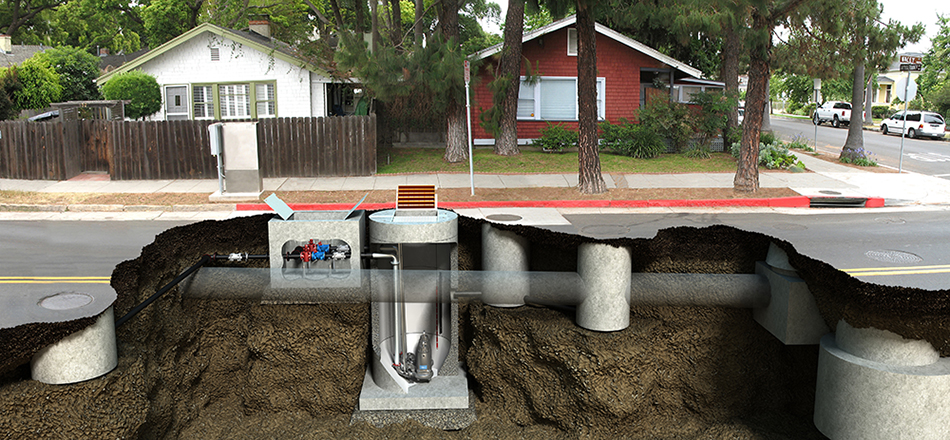
Good pumping design is about more than moving water
Pumping stations are constructed to transport water or waste in areas where gravity is not able to. A system that works isn’t good enough. It has to be efficient and reliable, simple to use, and compatible with state and local requirements. It has to work in real-life, not just on paper.
This covers everything from structural design and wet well sizing to controls and electrical systems, communications equipment and access to maintenance crews. Even if one of these elements isn’t well-planned and designed, it could cause issues with operation for a long time. This is one reason owners and engineers place so much value on working with the best lift station designers. Experience matters when you are trying to manage the performance of your hydraulic system, its long-term durability budget, constraints on the site at once.
Romtec Utilities brings all of these areas together under the same umbrella. The company handles the mechanical, structural and electrical components of the station as a complete system, ensuring that customers don’t need to coordinate multiple vendors. This single source approach typically saves time in the design process, eliminates confusion in the process of purchasing and also provides a smoother process to install.
If properly designed If designed correctly, pumping systems for package pumps can simplify things.
A package pumping system is able to simplify infrastructure projects as it brings together key elements into a unified solution. The real value lies in how it has been created. Systems that are not designed to be compatible can lead to problems with performance, equipment that is too large unneeded maintenance expenses or long-term problems.
Romtec Utilities approaches each package as a custom-engineered solution rather than a catalog product. This means choosing the best valves, pumps, controls, piping, and enclosure options based on real needs of the site. This includes thinking about the way in which the system will function to be maintained, monitored and monitored. In the context of utility infrastructure, careful coordination from the beginning of the design phase typically prevents larger issues later.
Booster Pump Stations address a different kind of issue in infrastructure
Not all projects are about water treatment. In many cases, ensuring pressure in the water is as crucial as transferring sewer. Booster pumping stations play an important role. These systems keep water flowing efficiently in distribution systems regardless of pressure issues due to changes in elevation, long pipe runs or high demand.
The design of booster systems are usually different from other types of systems. They may require control structures, variable-frequency drives, SCADA integration and telemetry. Romtec Utilities designs the stations in the same way as wastewater systems to ensure that the end product is both functional and operational.
A well-planned strategy leads to better performance over the long haul
Romtec Utilities offers early design assistance to its customers. This is among its greatest benefits. The preliminary engineering and design support enables project teams to better understand the nature, structure and costs of the installation prior to when they get too far into the procurement or construction. This is a major advantage for consultants, government agencies as well as developers trying to stay within the budget and within time.
Designing well is the key to achieving success. A good design consultant will offer more than just equipment. The right design partner helps create a solution that is suited to the location and meets the needs of the owner.
In utility work The most reliable methods are typically those people don’t notice because they work. This type of reliability is not a result of chance. It’s the result of careful engineering, strong coordination, and the ability to build each system around the real demands of the project.